
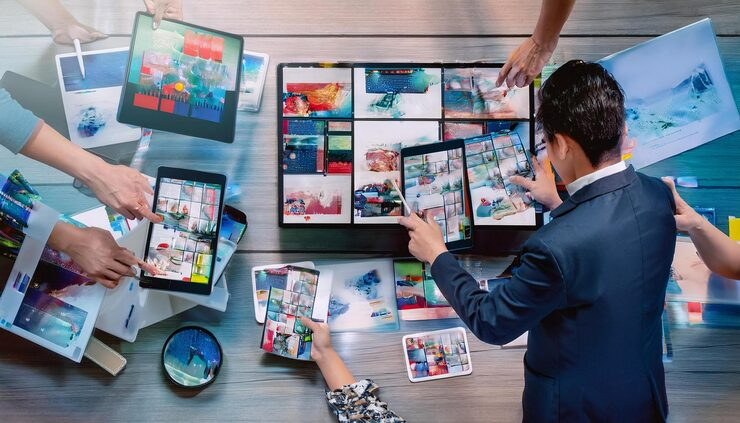
The journey of visual work doesn’t start with an empty canvas. Creatives today take an image already in existence and twist it into something entirely different. This evolution has transformed how designers, marketers and storytellers think about creative work.
One of the most significant new technologies includes image to image technology. Rather than creating visuals from a starting point, this approach morphs one image into another while retaining structure, composition or intent. When used with something like an ai video generator, it creates limitless storytelling opportunities that are interactive and responsive.

Understanding Image to Image Technology
The main idea behind im2im systems is to obtain a latent representation of the original source image, here we will visualize how advanced generative models can reinterpret them. Rather than superimposing filters, these systems analyze shapes, lighting, depth and style. They then recreate the image according to a fresh prompt or visual cue.
From Source Code to Semantic Transformation
Traditional editing tools involve manual fine-tuning. Designers adjust colors, swap backgrounds or redraw elements. Image to image tools though, know what context means. For instance, a street scene on a sunny day can be changed to nighttime and still maintain layout and perspective.
This streamlines repetitive work and provides creators more time for concept and storytelling. There is a slight, but not mechanical, giddiness to the transformation.
Preserving Structure While Changing Style
Structural consistency is one of the most powerful benefits of image to image workflows. The fashion brand can use the same product pose to play around with different artistic styles. Without the need to redraw the whole concept, an architect can create a visualization of that same building idea in alternate materials.
To keep a nimble and financially responsible pace, development speeds to a crawl: a balance between control and flexibility that makes the technology practical for professional use rather than just experimentation.
How do AI Video Generator Tools Fit into Visual Storytelling?
Static images are evocative, but motion adds a further dimension. As the expectations for content increase, creators are combining image transformation with motion-based tools.
An ai video generator is built on similar generative principles. Rather than altering one frame, it generates sequences that ensures visual continuity over time.
Turning Concepts into Motion
An altered image may become the first frame of a brief advertisement. After that, motion, changes in lighting or camera movements can all be added on its own. This closes the gap between how concept art and the final video game should look.
For educators, that means diagrams can transform into animated explainers. For marketers, visuals are product that you can clip short and share in social—no elaborate production set-up needed.
Faster Iteration, Better Testing
Video production historically involves planning, filming and editing/revision cycles. This loop gets much shorter with AI-based video generation. Teams are able to rapidly test a variety of visual directions, analyze which were more engaging, and iterate on content in near real-time.
The bulk of this post consists of a tangential discussion about the issues with using image to image systems and video generators together. One idea can span across several formats, seamlessly, without having to start anew every time.
Practical Applications Across Industries
These technologies are not unique to creatively focused agencies. Their effects are evident across all sectors.
Marketing and Personalized Campaigns
Brands are also increasingly looking to adapt visuals for various audiences. This is where image transformation comes into play — a single core visual is able to adapt itself onto various themes, regions or cultural references, while maintaining brand consistency.
AKOOL and similar platforms investigate generative AI use to aid personalization-enhancing visual marketing. Rather than creating dozens of discrete shoots, marketers can reimagine existing assets to support different angles in a campaign.
This strategy allows for experimentation without exponentially raising production costs.
E-Commerce and Product Visualization
Visuals are the lifeblood of online retailers. With image to image workflows, you can showcase one product in many scenarios—an urban scene, a minimalist room, a seasonal setting—without going through the work of staging each and every scene.
Along with video generation, these graphics can turn into brief previews or rotating product demonstrations. The end result is playful and engaging yet efficient to produce.
Education and Training
If you learn better with clear visuals, then give yourself that opportunity to see the benefits of typed-out text versus scrawled handwriting. Elaborate diagrams might be simplified or style the diagram visualisation for presentations. AI-generated video adds motion to help clarify step-by-step processes.
Educators may apply core visuals to multiple learning levels instead of creating distinct resources for each knowledge level.
Ethical and Creative Considerations
As with any compelling technology, how it gets used is key.
Maintaining Authenticity
Audiences value authenticity. While generative tools have a potential to bolster visuals, excessive or dubious manipulation can erode trust. And transparency and responsible editing practices go a long way in the credibility department.
Creatives need to see these tools as partners and not replacements. Human judgment is still required for storytelling, tone and accuracy.
Respecting Intellectual Property
The use of learned image characteristics in transformation systems usually requires the processing of sufficient data volumes. To professionals, you are required to create the contents as per copyright and licensing standards. Properly sourced input images and clear rights of use protect both creators and clients.
Ethical workflows galvanize a long-term health for these technologies.
The Evolution of Generative Visual Content
The differentiation between applicable use for the static image environments and the motion content world is rapidly diminishing. Image to image systems enable creators to quickly reimagine visuals, while AI-powered video tools stretch those graphics into moving experiences.
As the tools develop, attention will be less on technical curiosity and more strategic integration. It is not up to the teams to ask if they are able to create resulting visuals. Instead, they will inquire about how these capabilities aid in clearer communication, better engagement and more meaningful storytelling.
The best creators will harness human creativity with intelligent systems. They’ll experiment boldly, iterate on ideas well and shape content with the story in mind.
Conclusion
The way visual content is created, refined and repurposed is changing thanks to image-to-image technology. It allows for efficiency as well as aesthetic diversity by altering existing visuals without changing their form. There are some ideas that developing into movement when combined with an ai video generator.
As far as marketers, educators and designers are concerned, these tools are not shortcuts. They’re enablers of such thoughtful, adaptive storytelling. When used responsibly,they enable creators to present far more personalized and immersive visual experiences while maintaining authenticity or quality.
